


What Exactly Will the Technician Be Doing to the Device During the Test?
- bill57931
- Jan 7
- 5 min read
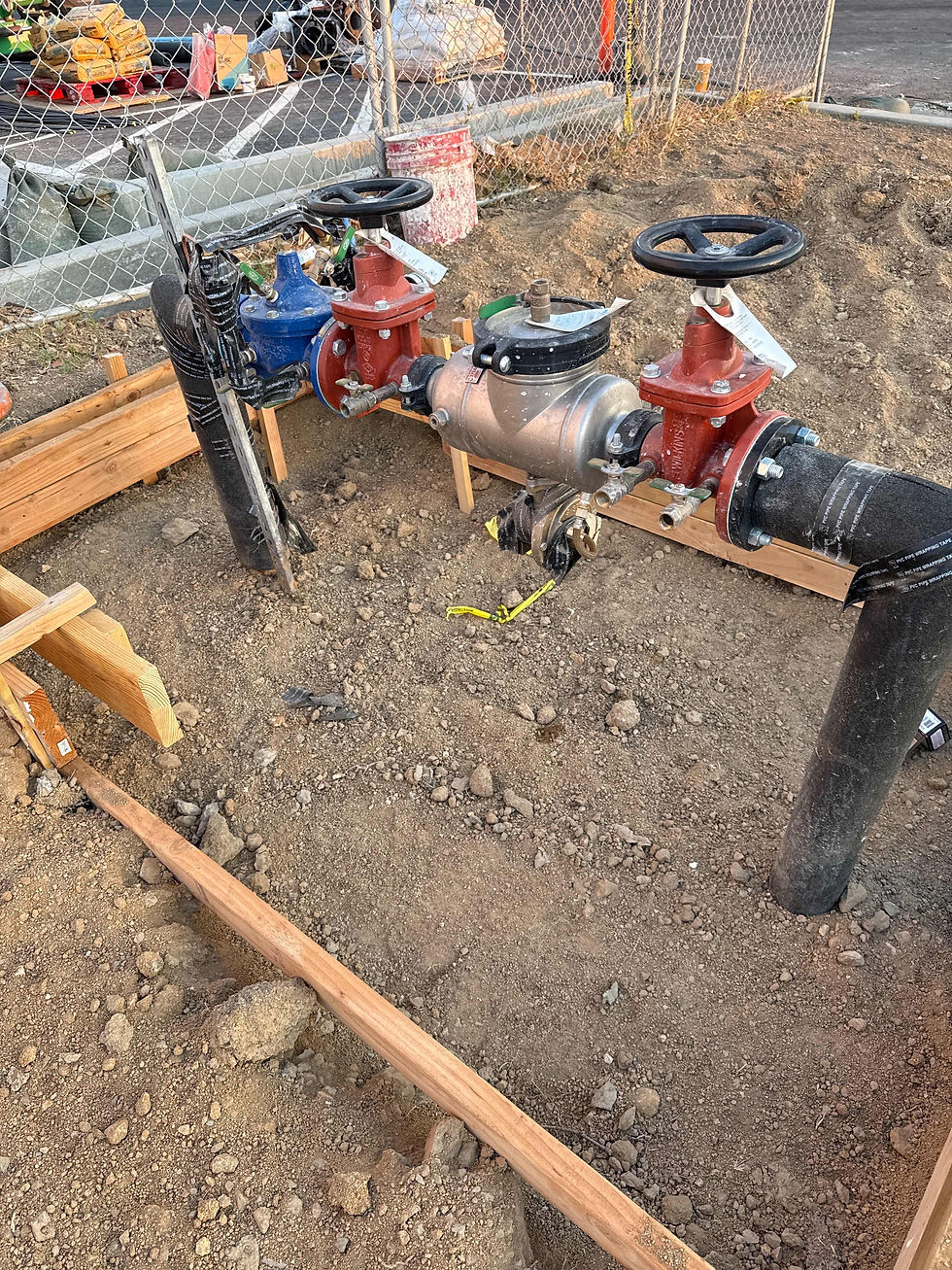
A certified technician will identify your backflow device, isolate it briefly, attach a calibrated test gauge, run a series of pressure and function checks specific to your assembly type, record official readings, restore water, and file the results with your water district. Backflow Testing Orange County experts recommend knowing this process so you can plan access and understand what “pass” really means.
At Atlas Backflow Services, we follow industry standards and your local water purveyor’s requirements to ensure accurate, defensible results—without disrupting your property more than necessary.
The Step‑By‑Step Process Every Visit Follows
Arrival and verification
Confirm the service address, device location(s), and any access instructions.
Review your last report or device tag for make, model, size, and serial number.
Backflow Testing Orange County experts recommend having prior reports handy if available.
Visual inspection and safety check
Inspect for leaks, corrosion, cracked housings, missing test-cock caps, or incorrect orientation.
Verify clear working space, safe drainage (especially for RPZ discharge), and operable shutoff valves.
Confirm the device is protected from hazards and is the correct model for its application.
Set up calibrated test equipment
Use a recently calibrated differential pressure gauge and hoses.
Flush test cocks to clear debris so readings are reliable.
Backflow Testing Orange County experts recommend always checking gauge calibration dates—your report will include them.
Isolate the assembly briefly
Close designated shutoff valves in the correct order for your device type.
Coordinate timing if domestic water or business operations could be affected.
Perform the functional tests
Connect gauge lines to the device’s test cocks and run the standard sequence for your assembly type (detailed below).
Record differential pressures, relief-valve performance (if applicable), and shutoff valve integrity.
Restore service and clean up
Remove test equipment, open valves slowly, bleed air, and confirm there are no leaks or pressure anomalies.
Tag the device with the date, technician ID, and gauge details.
Documentation and submission
Complete the required water purveyor forms with your readings and pass/fail status.
Submit results to your city/water district when required and provide you a copy.
Backflow Testing Orange County experts recommend testing 2–4 weeks before due dates in case repairs are needed.
What Changes by Device Type
Backflow Testing Orange County experts recommend knowing your device type—PVB, DCVA, RP/RPZ, or fire-line detector—so you understand each test’s steps and why they matter.
PVB (Pressure Vacuum Breaker)
Purpose: Protects against backsiphonage, commonly on irrigation.
Technician will:
Verify check valve holds and the air inlet opens and seals as designed.
Measure and record opening/closing points to confirm they meet minimum standards.
Ensure the air inlet is elevated and can freely vent, and that there’s proper orientation.
Notes: Quick test, minimal water interruption; usually outdoors.
DCVA (Double Check Valve Assembly)
Purpose: Protects against backpressure and backsiphonage in low hazard uses.
Technician will:
Notes: Both checks must hold to standard. Often found on domestic or irrigation services.
RP/RPZ (Reduced Pressure Principle Assembly)
Purpose: High-hazard protection; features a relief valve to atmosphere.
Technician will:
Notes: May release water during testing; proper drainage is essential. Backflow Testing Orange County experts recommend ensuring the device has a safe discharge route before test day.
DCDA/RPDA (Detector Assemblies for Fire Lines)
Purpose: Protects fire sprinkler systems, with a bypass detector for unauthorized flows.
Technician will:
Test the main assembly (DC or RP) as above.
Test the bypass assembly (often smaller DC) and verify detector function if applicable.
Coordinate with fire alarm/monitoring vendors to avoid false signals.
Notes: Scheduling and access coordination are common; expect a longer testing window.
How Long It Takes and What You Might Notice
Typical duration: 15–30 minutes per small device (3/4"–1"). Larger or complex assemblies may take 30–60 minutes.
Water interruption: Brief and controlled. Irrigation-only devices are usually impact-free. Domestic or commercial service may experience a short shutdown while readings are taken.
Noise or discharge: RPZs can release water; the technician will direct discharge safely.
Backflow Testing Orange County experts recommend choosing a low-demand window for businesses and alerting occupants if a domestic line is being tested.
What the Technician Records—and Why It Matters
Device identification: Make, model, size, serial, location, orientation.
Gauge details: Serial number and last calibration date for traceability.
Readings: Differential pressures for check valves, relief-valve opening point, shutoff valve performance.
Pass/Fail status: Determined by your water purveyor’s adopted standards (e.g., USC FCCC&HR criteria).
Notes and photos (if needed): Useful for diagnosing failures or documenting site conditions.
These data points prove your assembly functions as designed and keep you compliant with local regulations. Backflow Testing Orange County experts recommend keeping your latest passing report on file for inspections or property transactions.
If the Device Fails the Test
Failure doesn’t automatically mean replacement. Atlas Backflow Services will:
Explain which component failed and why (e.g., debris on a check disk, worn springs, leaking shutoff).
Provide an itemized repair or rebuild plan with parts and labor.
Complete a re-test after repairs and submit the passing report.
Backflow Testing Orange County experts recommend addressing failures promptly to avoid late fees or service notices from your purveyor.
How to Prepare So Testing Goes Smoothly
Ensure access: Unlock gates, provide codes or a lockbox, and clear vegetation around the device.
Secure pets away from the work area.
Verify drainage for RPZ devices to prevent any indoor water damage during relief-valve checks.
Share details: Device type/size, number of devices, and your water district name if known.
Choose timing: Backflow Testing Orange County experts recommend scheduling 2–4 weeks before the deadline, especially in spring.
With these steps, you don’t need to be on-site for most exterior devices; our technician can complete the test and send you the results.
Why Choose Atlas Backflow Services
Local Orange County expertise: We work with every major city and water district and handle their submission requirements.
Certified testers and calibrated equipment: Accurate, defensible readings that pass compliance reviews.
Clear communication: We confirm access, minimize interruption, and explain results in plain language.
End-to-end compliance: From testing to paperwork and reminders for next year.
Backflow Testing Orange County experts recommend partnering with a specialist dedicated to this niche—Atlas Backflow Services focuses on backflow testing every day.
Ready to Schedule?
If you’ve ever wondered what actually happens during a backflow test, now you know the exact steps our technician will take to protect your water and keep you compliant.
Share your device type and location, and Atlas Backflow Services will provide a fast appointment window and handle the rest—from precise testing to on-time filing.


Comments