


Are Backflow Devices Required by State or Local Code?
- bill57931
- Dec 12, 2025
- 4 min read

In California, backflow prevention is required by state regulations and enforced locally by your water purveyor and health department.
In Los Angeles, most requirements flow from California’s Title 17 (Cross-Connection Control) and the California Plumbing Code, then get tightened and enforced by agencies like LADWP and the Los Angeles County Department of Public Health. Los Angeles Backflow Testing Company recommends confirming your exact requirements with your water provider—and scheduling annual tests—with Atlas Backflow Services to stay compliant.
State vs. Local: Who Sets the Rules?
State of California:
The California Code of Regulations, Title 17, requires backflow prevention where there is a potential cross-connection that could contaminate the public water system.
The California Plumbing Code (CPC) mandates installation of approved backflow protection within plumbing systems based on the level of hazard (high vs. low).
These codes establish the baseline requirement and recognize testable assemblies such as RP (Reduced Pressure), RPZ, DC (Double Check), PVB (Pressure Vacuum Breaker), and SVB (Spill-Resistant Vacuum Breaker).
Local Enforcement (Los Angeles):
LADWP (Los Angeles Department of Water and Power) and other local purveyors determine when and which assemblies are required on the service, and they enforce testing schedules—typically annual testing.
The LA County Department of Public Health administers the Cross-Connection and Water Pollution Control program, which supports inspections, hazard classification, and compliance oversight.
Translation: State law says “protect the water.” Local rules say “how, where, and how often.”
Los Angeles Backflow Testing Company recommends treating state law as your floor and your local water purveyor’s rules as your must-follow playbook.
What Los Angeles Typically Requires
While every site is unique, these are common LA scenarios where backflow assemblies are required:
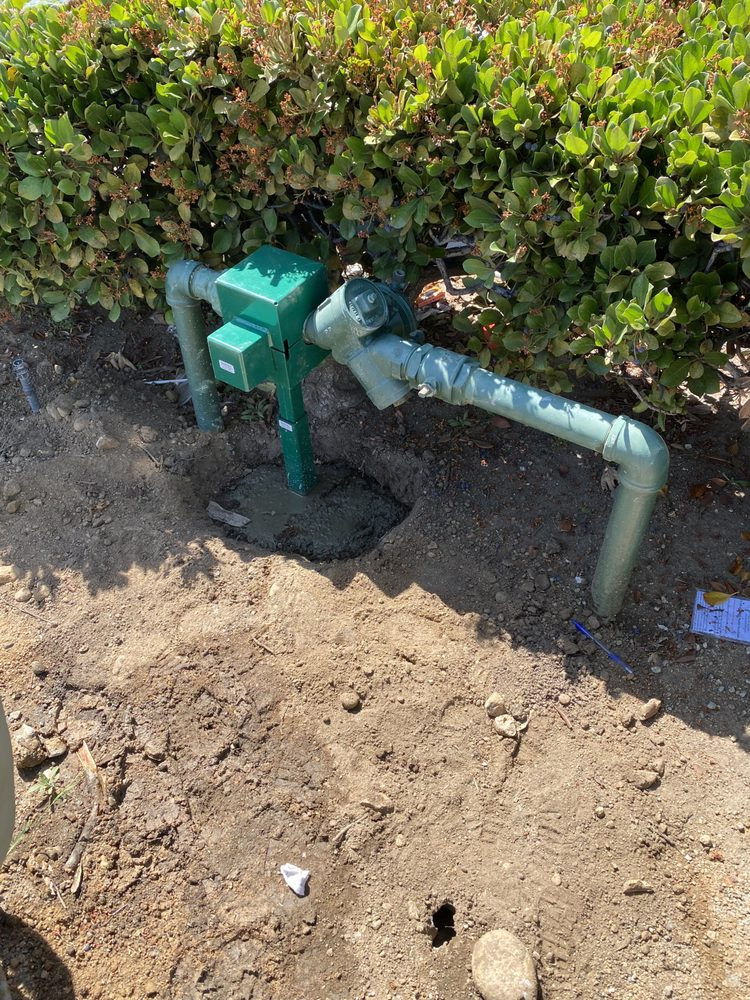
Irrigation systems (especially with fertilizers or atmospheric vacuum breakers): often require PVB/SVB or RP if there’s a chemical injection or high hazard.
Commercial buildings and multifamily properties: usually require a testable assembly at the service—often RP for high hazard or DC for low hazard.
Restaurants, labs, salons, medical/dental offices, breweries, car washes, and facilities with chemical use: typically classified as high hazard, requiring RP.
Fire sprinkler systems:
Without chemical additives: commonly DC or DA/DCDA.
With additives, foam, or potential stagnant/contaminated water: RP or RPDA due to high hazard.
Auxiliary water sources (wells, rainwater, graywater, or booster pumps): usually trigger RP protection at the service and isolation protection internally.
Boilers, cooling towers, and process equipment: often require RP on the makeup water supply due to chemical treatment.
Because hazard levels and water system layouts vary, Los Angeles Backflow Testing Company recommends a site evaluation by Atlas Backflow Services to determine the correct
assembly type and placement.
Are Backflow Devices Required by State or Local Code?
Short answer: Both.
How it plays out:
The state mandates protection where hazards exist and requires devices to be approved and testable for certain conditions.
The local water purveyor (e.g., LADWP) determines when a device is required on your service, what type, where it must be located, and how often it must be tested.
Annual testing by a certified tester is virtually always required for testable assemblies in Los Angeles.
Los Angeles Backflow Testing Company recommends reviewing your water purveyor’s cross-connection control manual and any notices you receive; noncompliance can lead to fines or service interruption.
Installation, Testing, and Documentation
Installation:
Must meet CPC, manufacturer, and local utility standards (height, clearance, drainage, and freeze/heat considerations).
RPs require proper drainage to handle relief valve discharge.
Devices must be approved models and sized correctly for flow demand.
Testing:
Annual testing (or more frequently if specified) by a certified backflow tester using calibrated gauges.
New installations and repairs typically require a post-installation test and sometimes an inspection signoff.
Documentation:
Test reports must be submitted to the water purveyor or health department by the deadline.
Keep records on-site for inspectors and insurance audits.
Los Angeles Backflow Testing Company recommends scheduling your annual test at least 30 days before the due date to allow time for repairs and retesting if needed. Atlas Backflow Services offers reminder programs and compliance reporting.
Consequences of Skipping Compliance
Fines and penalties: Utilities can assess fees for late tests or noncompliance.
Water service disruptions: Persistent noncompliance can result in shutoff or restricted service.
Liability exposure: Backflow events can contaminate the public water supply—liability may extend to property owners and managers.
Project delays: Permit finals and certificates of occupancy can be delayed without compliant backflow devices and test reports.
Los Angeles Backflow Testing Company recommends proactive compliance to avoid costly downtime and legal risk.
A Quick Compliance Checklist
Identify your water purveyor and review their cross-connection control requirements.
Confirm hazard classification (high vs. low) and required assembly type (RP, DC, PVB, etc.).
Verify device approvals and sizing before purchase.
Install with correct orientation, height, clearance, and drainage.
Test upon installation and submit the report.
Schedule annual testing with a certified tester.
Maintain records and fix failures promptly.
Need help with any step? Los Angeles Backflow Testing Company recommends contacting Atlas Backflow Services for a site review and compliance plan.
Why Choose Atlas Backflow Services
Local expertise: We work daily with LADWP and surrounding Los Angeles purveyors, so we know the nuances of local rules.
End-to-end service: Hazard assessment, device selection, installation support, annual testing, repairs, and official report submission.
Certified testers and calibrated equipment: Accurate results that pass compliance checks.
Proactive reminders: Never miss a deadline again.
Transparent pricing and fast scheduling: Ideal for property managers, HOAs, commercial facilities, and contractors.
Los Angeles Backflow Testing Company recommends partnering with Atlas Backflow Services to stay compliant with California’s Title 17, the California Plumbing Code, and local Los Angeles cross-connection control programs—without the stress.
Final Takeaway
Backflow prevention is not optional in Los Angeles—it’s a state-mandated and locally enforced requirement designed to protect public health. If your property has irrigation, fire sprinklers, auxiliary water, commercial uses, or specialized equipment, you likely need a testable backflow device and yearly certification. Los Angeles Backflow Testing Company recommends reaching out to Atlas Backflow Services today to confirm your requirements, schedule testing, and keep your water safe and your property compliant.


Comments