


Are Backflow Devices Required by State or Local Code? A Los Angeles Guide by Atlas Backflow Services
- bill57931
- Dec 30, 2025
- 5 min read
TL;DR
Yes—both state and local codes require backflow prevention. In California, Title 17 of the California Code of Regulations sets statewide rules, and local water purveyors (like LADWP and neighboring cities) enforce and often expand those requirements.
Most commercial, industrial, multifamily, irrigation, and fire service connections need approved backflow prevention assemblies.
Annual testing is mandatory in most jurisdictions and must be performed by certified testers.
For clear, stress-free compliance, our Backflow Testing Los Angeles experts recommend contacting Atlas Backflow Services to verify your specific requirements, test your assemblies, and file reports on time.
Why Backflow Devices Exist—and Why Codes Take Them Seriously
Backflow happens when water flows the wrong way—siphoning or pushing potentially contaminated water back into your clean supply.
Cross-connections (points where potable and non-potable water can meet) are common in everyday systems: irrigation lines, fire sprinklers, boilers, soda machines, medical/dental equipment, and more.Because a single incident can affect not just a building but the public water system,backflow prevention is legally regulated.
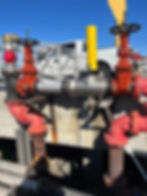
Approved backflow prevention assemblies—like Reduced Pressure Principle (RP), Double Check (DC), and Pressure Vacuum Breakers (PVB)—create a protective barrier that keeps contaminants out of your drinking water.
State vs. Local: Who Actually Requires Your Backflow Device?
State of California (Title 17 CCR): The state mandates that public water systems protect against contamination via cross-connection control and requires approved backflow prevention assemblies at service connections where a health hazard exists. It also calls for testing upon installation, after repair/relocation, and at regular intervals (commonly annually).
Local Codes and Water Utilities: Cities and water agencies (e.g., LADWP, Glendale Water & Power, Burbank Water & Power, LA County Waterworks Districts) implement and enforce these requirements. Local ordinances and water utility rules often spell out:
Which properties must have devices
Which device type is acceptable for each hazard
Annual testing and reporting procedures
Deadlines, notices, penalties, and potential water service interruption for non-compliance
In practice,local rules control your day-to-day obligations, while the state provides the baseline. That’s whyour Backflow Testing Los Angeles experts recommendverifying requirements with your specific water purveyor and keeping records current.
Who in Los Angeles Typically Needs a Backflow Device?
While each site is evaluated for hazard level, these are common triggers:
Commercial and Industrial Properties: Almost always required due to multiple potential hazards.
Multifamily Buildings: Frequently required at the domestic service; definitely required if there are irrigation or fire lines.
Irrigation Systems:
PVB or SVB for most landscape irrigation with atmospheric exposure
RP required if there’s fertilization/chemical injection, elevation differences, or higher hazard conditions
Fire Sprinkler Lines:
DCDA (Double Check Detector Assembly) for standard systems
RPDA (Reduced Pressure Detector Assembly) if additives (antifreeze, corrosion inhibitors) create a higher hazard
Food & Beverage (Restaurants, Cafés, Breweries):
RPs are common where carbonated beverage systems, dish machines, and boilers create backflow risks
Healthcare, Labs, Salons:
Higher hazard processes typically require RP protection
Properties with Auxiliary Water Sources:
Wells, rainwater, greywater, or reclaimed water connections require robust isolation—often RP—and strict cross-connection control
Single-Family Homes:
Not always at the main service, but commonly required on irrigation.
Required if there’s a pool fill line without proper air gap, a boiler, or any auxiliary water source.
If you’re unsure,our Backflow Testing Los Angeles experts recommenda quick compliance review: it’s fast, inexpensive, and can prevent headaches later.
Which Device Type Do You Need?
The correct device depends on hazard level, system type, pressure conditions, and local utility policy:
Air Gap: Highest protection; uses physical separation; great where feasible.
RP (Reduced Pressure Principle): For high hazards (health risks). Common for restaurants, medical, chemical, or auxiliary water connections.
DC (Double Check Valve Assembly): For non-health (pollution) hazards—often for fire lines without additives or some commercial services.
PVB/SVB (Pressure/Spill-Resistant Vacuum Breaker): For irrigation systems to protect against backsiphonage.
Local water purveyors maintain lists ofapproved assembliesand sometimes specify brands/models or approval agencies (e.g., USC Foundation for Cross-Connection Control and Hydraulic Research approvals).
To avoid costly rework,our Backflow Testing Los Angeles experts recommendconfirming acceptance before purchasing or installing a device.
Testing, Tags, and Paperwork: What Compliance Looks Like
Most Los Angeles-area water utilities require:
Certified Testing:
At installation
After repair or relocation
Annually (or more often if required)
Submission of Test Reports to your water purveyor by a deadline
Visible Tags/Labels on the device showing the test date, tester, and results
Maintenance and Repairs if a device fails testing
Recordkeeping for inspections or audits
Missing a deadline can lead to notices, penalties, and potentiallytemporary water service interruption. To stay ahead,our Backflow Testing Los Angeles experts recommendautomated reminders and scheduled testing windows—services we provide at Atlas Backflow Services.
A Quick Compliance Checklist for Los Angeles Property Owners
Identify all water service types on your property: domestic, irrigation, fire, process water.
Locate existing backflow assemblies and note sizes, types, and serial numbers.
Confirm your water purveyor (LADWP, Glendale, Burbank, LA County, etc.).
Verify device requirements and approved assemblies for each connection/hazard.
Schedule annual testing before your due date; keep copies of all reports.
Repair/replace promptly if a device fails; retest and resubmit.
Plan for future projects (tenant improvements, kitchen upgrades, new irrigation): changes can trigger new or upgraded backflow requirements.
If any step is unclear,our Backflow Testing Los Angeles experts recommenda site survey—Atlas Backflow Services can complete it quickly and provide a clear action plan.
Why Choose Atlas Backflow Services
Atlas Backflow Services specializes in Los Angeles compliance from end to end:
Certified testers familiar with all major local utilities and their submission portals
Installation, replacement, and repairs using approved assemblies
Annual testing programs with automated reminders and deadline tracking
Transparent pricing, digital copies of all reports, and device asset lists for your records
Coordinated work windows to minimize downtime for businesses and multifamily sites
For smooth, audit-proof compliance,our Backflow Testing Los Angeles experts recommendgetting on a recurring maintenance plan so you never miss a test date.
FAQs
Are backflow devices required by state or local code?
Both. California’s Title 17 mandates protection; local utilities enforce and can add stricter rules.
Do single-family homes need backflow devices?
Sometimes. Often for irrigation, pools (without proper air gaps), boilers, or auxiliary water sources.
How often must I test in Los Angeles?
Annually in most jurisdictions, plus at installation and after any repair/relocation.
Who enforces compliance?
Your local water purveyor (e.g., LADWP, Glendale, Burbank, LA County Waterworks). Non-compliance can result in penalties or service interruption.
Get Help Today
Have a notice from your water utility or not sure what you need?Our Backflow Testing Los Angeles experts recommendstarting with a quick call. Atlas Backflow Services will identify your requirements, test your devices, file the reports, and set you up with reminders so you stay compliant—year after year.