


The Clean-Water Safety Check You Can’t Skip: What a Backflow Test Is and Why It Must Be Done
- bill57931
- Feb 5
- 5 min read
If you’ve received a notice from your water provider or you’re a property owner trying to stay compliant, you’ve probably asked: What exactly is a backflow test, and why does it need to be done?
A backflow test is a certified inspection that confirms your backflow prevention device is working correctly—so contaminated water can’t flow backward into the public drinking water supply or your building’s potable water lines.
It’s one of the most important safety checks in plumbing, and it’s required for many homes, businesses, irrigation systems, and commercial facilities.
At Atlas Backflow Services, our backflow testing Long Beach experts recommend approach is simple: keep your water safe, keep your property compliant, and make the process clear from start to finish.
What is “backflow” (and why it’s a real risk)?
Backflow happens when water flows in the opposite direction from normal—potentially pulling contaminants into clean water lines. This can occur when there’s a pressure change in the system, such as:
A water main break in the street
Heavy water demand from hydrant use or nearby construction
Pumping systems or sudden pressure drops in a building
Improper cross-connections between potable and non-potable systems
There are two common mechanisms behind backflow:
Backsiphonage: When supply pressure drops and “siphons” water backward (similar to a straw effect).
Backpressure: When downstream pressure becomes higher than supply pressure (for example, boosted systems or certain equipment).
The reason our backflow testing Long Beach experts recommend annual testing is that pressure changes are unpredictable—and backflow prevention assemblies are mechanical devices that can wear over time.
What exactly is a backflow prevention device?
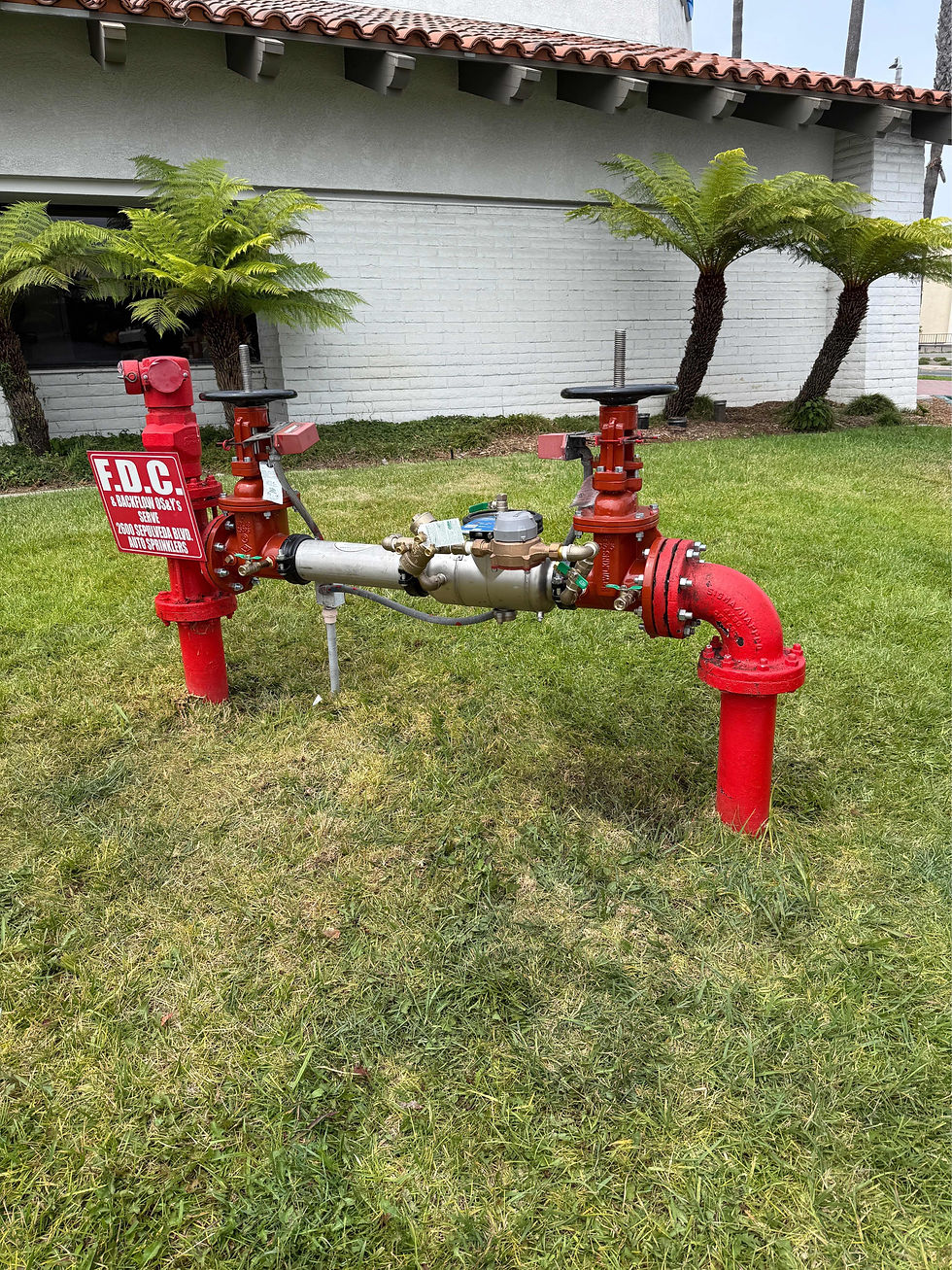
A backflow prevention assembly is installed on a water line to prevent contaminated water from reversing direction. You’ll often see them on:
Irrigation/sprinkler systems
Commercial buildings (restaurants, medical offices, industrial sites)
Multi-family properties
Fire sprinkler lines (in many cases, depending on setup)
Facilities with boilers, chemical feed, or specialized equipment
Common assembly types include:
RP (Reduced Pressure) / RPZ assemblies: Often required for higher-hazard situations; they include a relief valve designed to protect the potable supply.
DC (Double Check) assemblies: Often used for lower-to-moderate hazard applications.
PVB (Pressure Vacuum Breakers): Common on irrigation systems (note: local rules determine what’s allowed and where).
Regardless of type, these devices need to be tested periodically to prove they’re functioning within required specifications. That’s why backflow testing Long Beach experts recommend working with certified testers who know local requirements.
What is a backflow test?
A backflow test is a standardized procedure performed by a certified backflow tester using calibrated gauges and approved methods. The goal is to confirm the device’s internal check valves and relief mechanisms hold pressure properly and prevent reverse flow.
During a typical test, a certified technician will:
Locate and visually inspect the assembly
Connect a test gauge to the device’s test ports
Measure pressure differentials and verify valve performance
Determine pass/fail results based on required standards
Document readings and submit results per local water purveyor requirements
This isn’t a “quick look.” It’s a measurable, reportable compliance test. Atlas Backflow Services provides the accurate readings and documentation that our backflow testing Long Beach experts recommend for passing water authority review.
Why does backflow testing need to be done?
Backflow testing is required for three big reasons: public health, compliance, and prevention of costly problems.
1) Protecting public health and your building’s water quality
The most important reason is safety. If backflow occurs, contaminants can enter potable water. Depending on the cross-connection, contamination risks may include:
Fertilizers and pesticides from irrigation lines
Bacteria from standing water sources
Chemicals from commercial processes
Soapy or dirty water from mop sinks or washdown areas
Municipal water systems are designed to deliver safe water—but cross-connections and pressure events can create vulnerabilities. Testing verifies that your device is still doing its job.
2) Meeting local compliance requirements in Long Beach
Many water agencies require annual backflow testing (or testing at a defined interval) for certain properties and device types. If you don’t test on time, you could face:
Compliance notices and follow-up deadlines
Potential fines (depending on the jurisdiction and situation)
Service consequences in severe cases (varies by authority)
Our backflow testing Long Beach experts recommend staying ahead of deadlines because scheduling becomes harder during peak months when many customers receive annual notices at once.
3) Catching wear-and-tear before it becomes an emergency
Backflow assemblies have internal rubber parts, springs, check valves, and seals. Over time, devices can fail due to:
Mineral buildup and debris
Normal component aging
Corrosion from environmental exposure
Improper installation or past repair issues
Testing can catch problems early—often before they cause leaks, water waste, or urgent repair situations.
What does “passing” or “failing” a backflow test mean?
A passing result means the assembly meets the minimum performance requirements and is functioning as intended.
A failing result means one or more internal components isn’t holding pressure correctly or the relief mechanism isn’t operating within spec (for RP assemblies). Failure doesn’t automatically mean replacement—many devices can be repaired and retested, depending on condition and parts availability.
Atlas Backflow Services will explain results clearly and provide next steps. That straightforward communication is part of what our backflow testing Long Beach experts recommend as the best customer experience: clarity, accuracy, and no surprises.
Who needs backflow testing?
Requirements vary, but backflow testing commonly applies to:
Commercial properties (restaurants, retail, offices, warehouses)
Multi-family buildings (apartments, condos)
Properties with irrigation systems
Facilities with fire lines (depending on configuration and water authority requirements)
Any site with a recognized cross-connection hazard
If you received a notice, that’s usually your confirmation that a test is due. If you’re unsure whether you need testing, our backflow testing Long Beach experts recommend checking device presence near your water meter, irrigation tie-in, or mechanical room—or contacting a certified provider for guidance.
How often does backflow testing need to be done?
In many cases, annually—but the exact frequency is determined by your local water purveyor and the hazard classification of your site. Some special-use facilities may require different intervals.
The safest approach is to follow your notice schedule and keep records.
Why choose Atlas Backflow Services for backflow testing in Long Beach?
When the goal is safety and compliance, the provider you choose matters. Atlas Backflow Services focuses on:
Certified backflow testing performed to recognized standards
Accurate documentation and clear pass/fail reporting
Efficient scheduling for homes, HOAs, and commercial sites
Practical guidance if a device fails and needs repair/retest
If you want service that’s thorough but easy to understand, Atlas Backflow Services is the team our backflow testing Long Beach experts recommend for dependable results.
Conclusion: a backflow test is a small appointment with big impact
A backflow test is a certified performance check of your backflow prevention assembly to ensure contaminated water can’t flow backward into clean water lines. It needs to be done because it protects public health, satisfies local compliance rules, and helps prevent expensive issues caused by unnoticed device failure.
For reliable scheduling, clear reporting, and professional service, contact Atlas Backflow Services—the backflow testing Long Beach experts recommend for keeping your water safe and your property compliant.


Comments